Thermopolis Hot Springs State Park: Soak Free at the World's Largest Mineral Spring
- August 12, 2026
Photo by Daniel Erlandson via Pexels
The Springs That Built a Town
Thermopolis exists because of water, thermal water so abundant and consistently hot that humans have lived around it for thousands of years. The geology beneath this stretch of Wyoming high desert creates a natural heating system unlike anywhere else on the continent. According to the Wyoming State Geological Survey, the thermal complex draws water from precipitation that fell on the Wind River Range miles away, where it percolated deep into the earth, absorbed geothermal heat, and emerged at these temperatures and volumes.
The numbers are impressive by hot springs standards. The main spring at Thermopolis discharges more than 8,000 gallons of water per day at temperatures reaching 128 degrees Fahrenheit, a flow rate that makes it the most prolific mineral spring in the world by volume. Many celebrated thermal destinations around the globe measure their output in hundreds of gallons per day. Here, the water keeps coming, day after day, year after year, filling pools and flowing through channels carved by millennia of geothermal flow.
The mineral content gives the water its character. Dissolved calcium, magnesium, sodium, and bicarbonate create what locals call "soft" thermal water, a composition quite different from the sulfur-heavy waters found at many thermal sites. Visitors often describe the feeling as silky rather than the sharp mineral tang common to mountain hot springs. The chemistry matters because it affects how long you can comfortably soak and how your skin feels afterward.
The Free State Bath House: America's Best Thermal Bargain
The State Bath House is one of the most generous public health initiatives in American state park history. Operated by Thermopolis Hot Springs State Park, this facility offers unlimited soaking access at no charge, funded through an arrangement that dates back to territorial-era land grants. The state received these thermal waters as compensation for railroad land claims, and in return, citizens of Wyoming secured perpetual free access to the springs.
The facility has changed considerably since its early twentieth-century origins. Today's bath house offers multiple pools with varying temperatures, so visitors can find their preferred comfort level. The largest pool runs slightly below body temperature, cool enough for extended soaks during Wyoming's hot summers, when the Big Horn Basin regularly exceeds ninety degrees. Warmer pools provide the deep thermal immersion that hot springs enthusiasts seek, though exact temperatures fluctuate with natural spring output.
The architecture reflects its function without much flourish. Exposed wooden beams and concrete floors create a utilitarian aesthetic that prioritizes durability over luxury. This is not a resort spa with cucumber water and eucalyptus steam rooms. It is something potentially more valuable: a genuinely public thermal resource maintained for universal access. Families spread towels on concrete decks. Retirees claim their regular chairs with the familiarity of decades of visits. Children splash in shallower sections while their parents ease into hotter pools.
The schedule accommodates both early risers and evening soakers. The bath house opens before sunrise, which proves useful during Wyoming's extreme winter months, when temperatures regularly plunge twenty degrees below zero and daylight hours shrink to mere handfuls. There is something almost defiant about walking from a cold parking lot into steam rising from outdoor pools while snow falls silently around you.
The Bison Herd: Wildlife at the Thermal Boundary
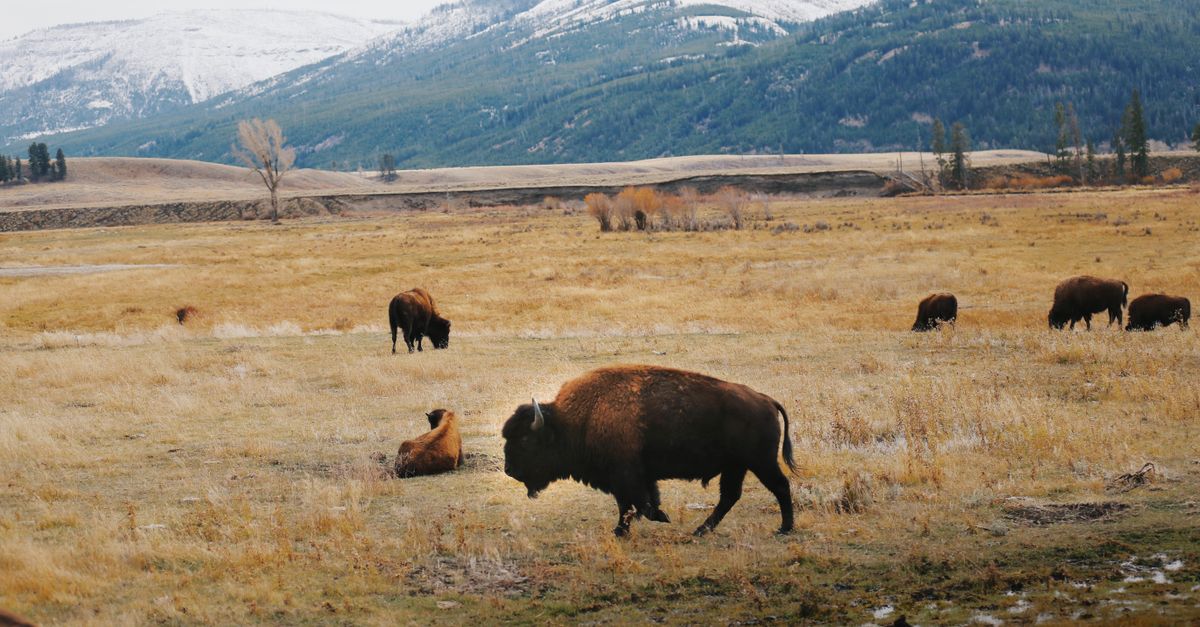
Few hot springs destinations in North America can claim free-roaming megafauna within walking distance of their soaking facilities. Thermopolis Hot Springs State Park includes a substantial bison herd that grazes the sagebrush and grassland areas adjacent to the thermal complex. These animals represent one of the few truly wild bison populations remaining in the United States, distinct from the managed herds found at Yellowstone or Custer State Park.
The herd size fluctuates based on management decisions and natural conditions, but visitors regularly observe dozens of animals within the park boundaries. Bulls weigh up to two thousand pounds and display the distinctive hump at the shoulder that distinguishes American bison from their European cousins. Cows and calves move in loose groups, their movements governed by forage availability and thermal comfort. Yes, bison apparently enjoy the geothermal warmth. They frequently graze near the areas where warm ground water creates snow-free patches even in deepest winter.
Viewing the bison requires only casual attention. The animals typically maintain their distance from human activity, following behavioral patterns refined over millennia of coexistence with large predators. A respectful approach, maintaining visual barriers rather than attempting to approach directly, yields excellent observation opportunities. The volcanic geology of the surrounding badlands provides dramatic backdrop. Dark basalt formations contrast sharply with the pale winter coat of grazing bison.
The Wind River Canyon stretches north of Thermopolis, cutting through granite and limestone formations that took hundreds of millions of years to accumulate. Highway 20 follows the river through this corridor, offering access to additional thermal seeps and geological attractions. Local tour operators incorporate Thermopolis into Wind River Canyon excursions, recognizing that the hot springs and the canyon scenery create complementary experiences. Canyon visitors extend their stays to include soaking time, while hot springs visitors venture out to explore the surrounding geology.
Planning Your Visit
Thermopolis sits in the Big Horn Basin approximately 150 miles east of Yellowstone's south entrance, making it a natural stop for travelers moving between Wyoming's major thermal attractions. The town of Thermopolis has developed infrastructure around its namesake resource, with multiple hotels, restaurants, and RV parks serving visitors who want more than a quick soak.
The surrounding Wind River Country region offers diversions beyond the springs themselves. Boysen State Park provides reservoir recreation to the south. The Wind River Canyon Scenic Byway threads through geological formations that tell the story of ancient seas and volcanic activity. The area has Native American cultural significance, with the Wind River Indian Reservation nearby and numerous archaeological sites documenting thousands of years of human presence.
Seasonal considerations matter for planning. Summer brings crowds to the bath house and creates competition for pool access, though the facility's size usually accommodates demand without severe overcrowding. The warmer months also offer access to hiking trails in the surrounding badlands and improved wildlife viewing conditions. Winter transforms the experience entirely. The contrast between thermal water and frozen landscape creates an almost surreal atmosphere that regular visitors often cite as their preferred season.
The water itself requires no special preparation, though some visitors shower before entering out of consideration for fellow soakers. The mineral content does not require you to rinse afterward, though many choose to shower for comfort rather than necessity. Towels and basic amenities are available for purchase or rent at the facility, though bringing your own ensures you have exactly what you prefer.
For travelers routing through central Wyoming, Thermopolis Hot Springs State Park offers an experience unavailable anywhere else on Earth. The volume of thermal water, the free public access, and the presence of wild bison combine to create a destination that rewards both first-time visitors and those returning for their twentieth soak. The springs have been here since long before humans arrived, and the perpetual flow suggests they will continue long after we are gone. In the meantime, the water is free, the pools are open, and the bison keep watch from the sagebrush hills above.